
CHEMICAL PEELS
Say hello to smoother, more radiant, and younger-looking skin. A chemical peel applies a carefully formulated solution to your skin to remove the top layers, getting rid of old skin cells. The skin that grows back is smoother, brighter, and younger-looking , stimulating healthy regrowth and rejuvenation.
How it Works
Maximum Efficiency
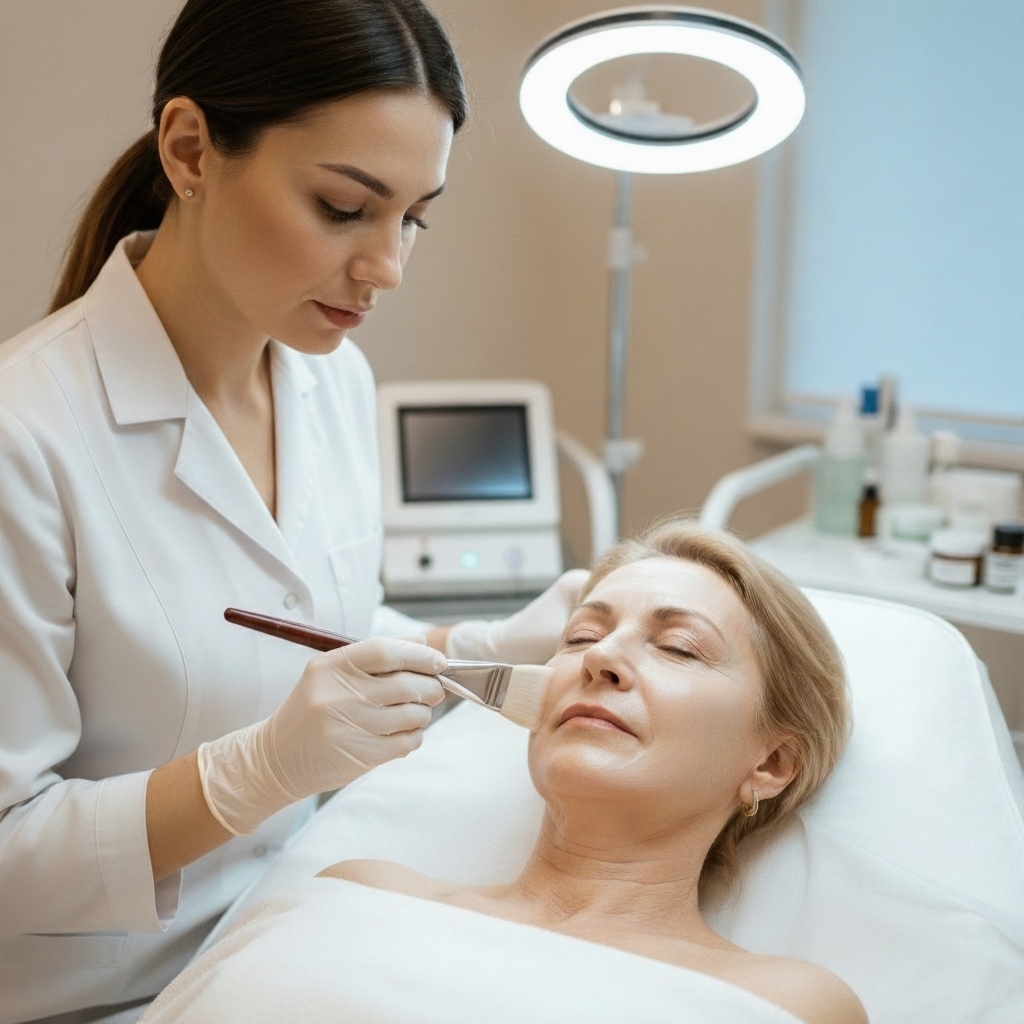
Chemical peels are a non-invasive way to rejuvenate the skin. We typically use a soft brush to apply a chemical solution made up of glycolic or salicylic acid. This gentle and unique blend of acids exfoliates the top damaged layers of skin, leaving your complexion fresh, renewed, and radiant.
The Comfort Of The Procedure
You may feel a slight tingling sensation, which is a sign that the solution is working. Your skin will begin to whiten, and we then use a neutralising solution to wipe the chemical peel away. Depending on the level of peel you choose, pain relief isn’t usually required.
Long-Lasting Results
Chemical peels are commonly used to treat wrinkles, signs of ageing, discoloured areas, scarring, and acne. By removing old cells and stimulating healthy regrowth, results can be long-lasting and effective for skin renewing and anti-ageing.
Safe for All Skin Types
Most skin types can benefit from chemical peel treatments. We assess each case on an individual basis to advise on the best course of treatment. A physical examination of your skin, including its tone and thickness, is carried out before treatment.
have a question?
Quick answers to questions you may have
What conditions are chemical peels used to treat?
They are commonly used to treat wrinkles, signs of ageing, discoloured areas of skin, scarring, and acne.
Are there different types of chemical peels?
Yes, treatments come in different depths—from light to deep. A light peel removes only the outer layer (epidermis) , while a medium peel removes cells from the epidermis and the dermis.
Which type of peel is best for fine lines?
A light depth peel is best-suited to fine lines and wrinkles, dryness, uneven skin tone, and small areas of acne.
How long does the treatment take?
Usually, a chemical peel takes around 30 minutes.
Is there any downtime?
No. Your skin may be slightly red for a few hours, but you can return to your normal activities straight away.
What should I do before and after treatment?
Beforehand, avoid tanning, fake tan, and unprotected sun exposure for at least two to four weeks. Afterwards, avoid the sun for around two weeks and use appropriate sun protection.
What areas can be treated?
Chemical peels are usually carried out on the face, but other common areas for treatment include the chest, back, and arms.
Do chemical peels work well with other treatments?
Yes, chemical peels and laser rejuvenation are safe to be used together and are an effective combination for anti-ageing and skin renewal.
How does the practitioner decide the right peel for me?
We review your medical history and carry out a physical examination of your skin (including its tone and thickness) to determine the suitable depth and treatment plan.
Are chemical peels suitable for everyone?
Yes, most skin types can benefit. However, we assess each case individually, and there are some skin conditions that shouldn’t be treated with skin peels.
What happens to my skin after the treatment?
Your skin will be slightly red, but this is completely normal. This redness typically subsides within hours.
Success Stories
More than 250 five-star reviews on Google