Tattoo Removal Sessions are one of the first things people ask about when they start thinking about getting rid of unwanted ink. And it's completely understandable. You want to know how long the process might take, how many appointments you'll need and when you can expect to see a difference. The honest answer is that …

Tattoo Removal Sessions are one of the first things people ask about when they start thinking about getting rid of unwanted ink.
And it’s completely understandable.
You want to know how long the process might take, how many appointments you’ll need and when you can expect to see a difference.
The honest answer is that there isn’t a magic number.
Every tattoo is different, and the number of sessions needed can vary considerably from one person to another. What we can do is look at the factors that influence your treatment journey and help you understand what may be realistic for your tattoo.
Why Does Tattoo Removal Take More Than One Session?
If you’ve read our previous blog, you’ll know that laser tattoo removal is a process.
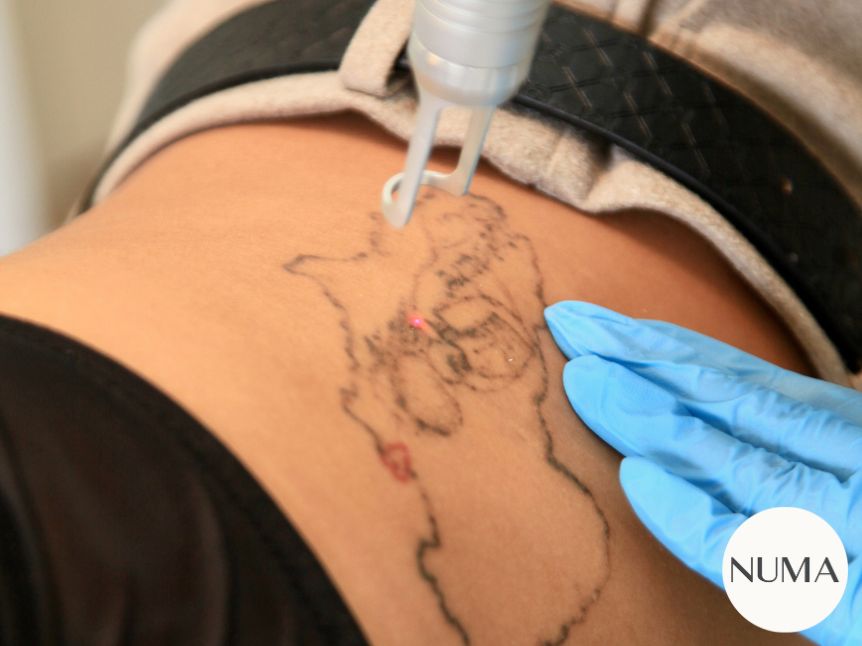
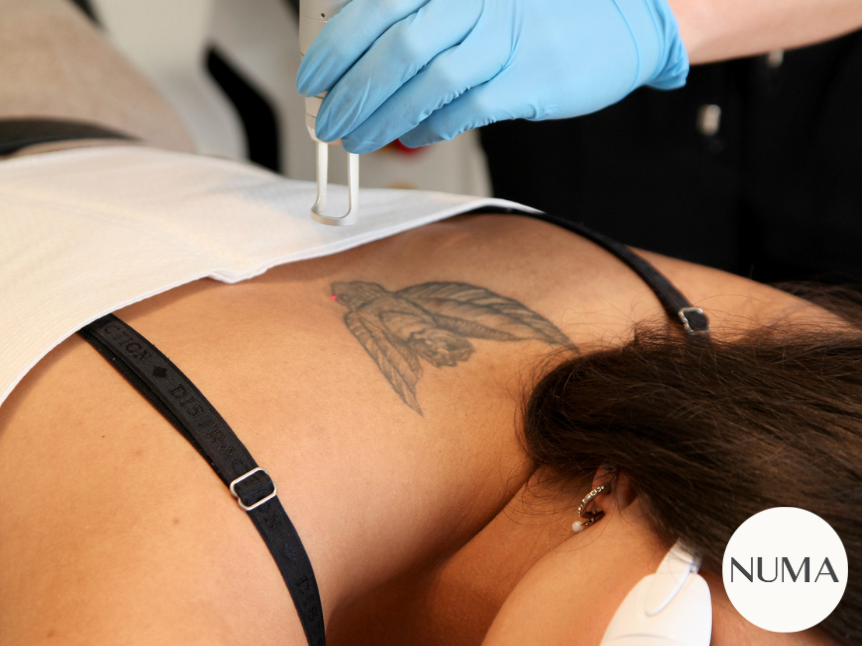
The laser targets the tattoo ink and breaks it into much smaller particles. Your body then gradually clears those particles away.
But it can’t clear everything at once.
After each treatment, your body needs time to process the fragmented ink. This is why sessions are spaced apart and why you may continue to see changes in the appearance of your tattoo in the weeks following treatment.
With each session, the aim is to gradually reduce the visible ink.
Think progress, not instant perfection.
What Affects The Number Of Sessions I Might Need?
There are several factors that can influence how your tattoo responds to treatment.
The Colour Of The Ink
Different tattoo pigments can respond differently to laser treatment.
Some colours may be more straightforward to target than others, which means the colour combination within your tattoo can influence the treatment journey.
The Age Of Your Tattoo
Older tattoos can sometimes respond differently to treatment compared with newer tattoos.
Over time, tattoos can naturally fade as some of the pigment breaks down and is cleared by the body.
However, an older tattoo isn’t automatically easier to remove. There are several factors involved, so the age of the tattoo is just one part of the picture.
The Size And Density
A small, lightly inked tattoo is very different from a large tattoo with dense, heavily saturated ink.
The amount and depth of pigment can influence how the tattoo responds and how long the removal process takes.
Where Your Tattoo Is Located
The location of your tattoo can also play a role.
Different areas of the body can respond differently to treatment, which is another reason why your practitioner needs to assess the tattoo rather than simply giving you a number based on size alone.
Your Individual Response
Perhaps the most important factor is that your body is unique.
Tattoo removal relies partly on your body’s natural processes to clear the fragmented ink, and everyone responds differently.
Two people can have tattoos that look very similar but experience completely different treatment journeys.
Will I See A Difference After The First Session?
You may.
However, it’s important not to judge your results too quickly.
The process doesn’t stop when you leave the clinic. Your body continues working on the fragmented pigment afterwards, so changes can become more noticeable over time.
You may see the tattoo gradually becoming lighter as you progress through your treatment journey.
Taking photographs along the way can also be helpful. When you’re looking at your tattoo every day, gradual changes can be difficult to notice.
Looking back at photographs from earlier sessions can give you a much better sense of your progress.
Why Can’t We Just Treat It More Often?
It might seem logical that if you want your tattoo gone faster, you should simply have treatments closer together.
But that’s not how the process works.
Your skin needs time to recover between treatments, and your body needs time to clear the fragmented ink.
Giving your skin and body the appropriate amount of time between sessions is an important part of the treatment process.
More isn’t necessarily better.
A carefully planned treatment journey is far more important than trying to rush the process.
What Happens At A Tattoo Removal Consultation?
Because there is no one size fits all answer to the question “How many sessions will I need?”, your consultation is an important first step.
We’ll assess your tattoo, look at factors such as its colour, size, age and location, and discuss what you’d like to achieve.
Whether your goal is to significantly fade the tattoo, work towards removing it or lighten it ready for a cover up, we’ll help you understand your options.
We’ll also talk you through the treatment process, what to expect and how to look after your skin between appointments.
Your Tattoo, Your Treatment Journey
If you’re considering tattoo removal, it’s worth remembering that progress doesn’t have to happen overnight to be progress.
The aim is to gradually reduce unwanted ink while giving your skin and body the time they need throughout the process.
So rather than asking “How many sessions will I need?” as though there is one answer for everyone, the better question is
“What could be possible for my tattoo?”
That’s exactly what your consultation can help you discover.
Ready To Find Out What’s Possible?
Our Tattoo Removal Consultation & First Session is currently £50.
If you’ve been thinking about an old tattoo, whether you want it removed or simply faded for a cover-up, speak to the NUMA team and take the first step towards your fresh start.
Book a Consultation
It’s easy and free!